What Is Online School? A Clear Guide for Parents
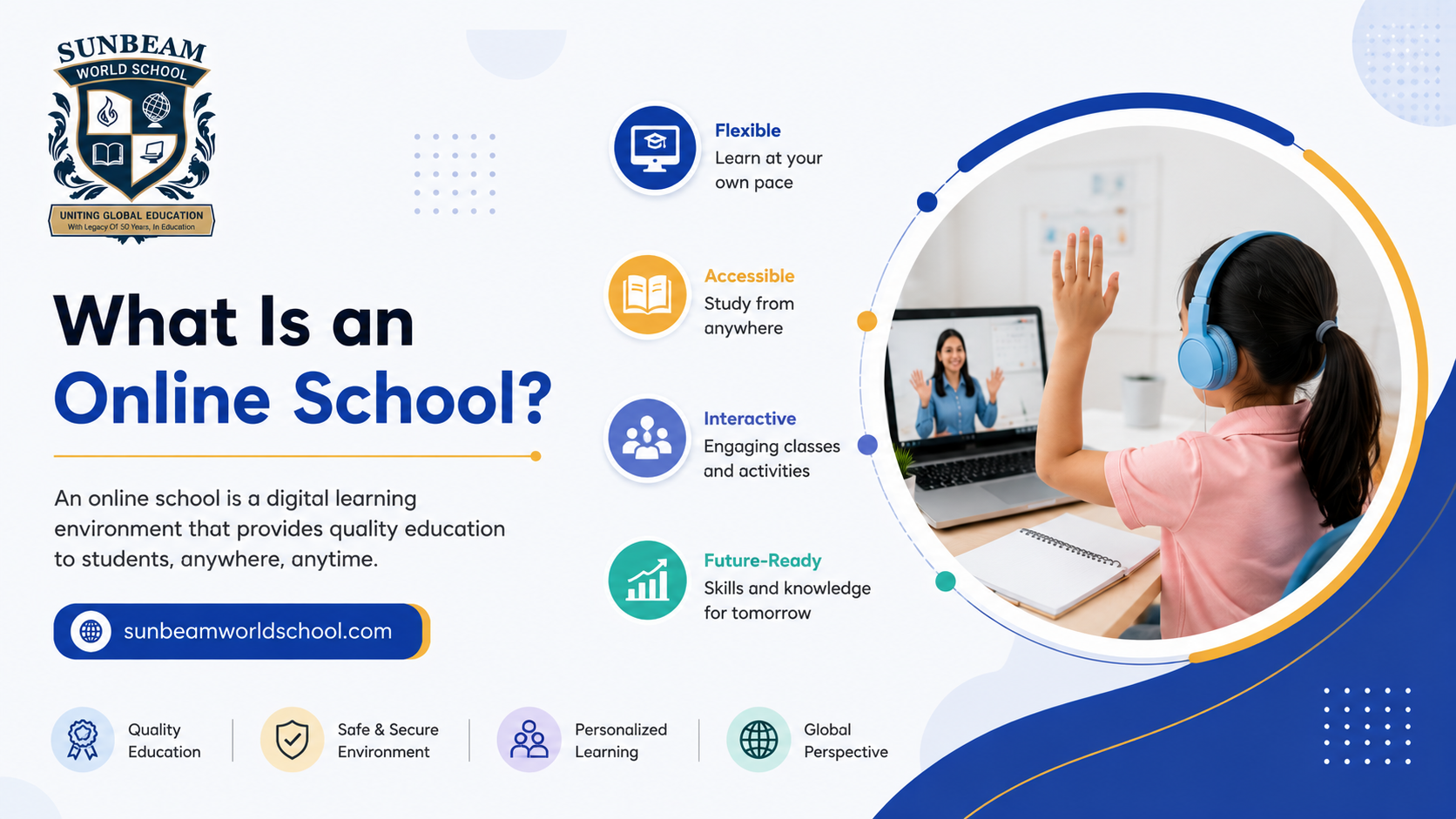
An online school is a real, full-time school that runs over the internet. Children attend live classes taught by qualified teachers, follow a complete curriculum, take assessments, and earn the same recognized board certificates as students at a physical school. The campus disappears; the schooling does not.
That one-paragraph definition solves most of the confusion around the term. Many parents hear “online school,” and picture recorded video lessons, or an app, or a parent teaching at the kitchen table. All three exist, but none of them is an online school. Understanding the differences is the fastest way to judge whether this model could work for your child.
How an Online School Actually Works
A typical day at a full-time online school looks surprisingly familiar. There is a timetable. Classes begin at a fixed hour and run as live video lessons in small groups, with a teacher who takes attendance, asks questions, and sets homework. Between classes, students complete assignments on a learning platform where teachers track their progress. Tests and term assessments happen on schedule, report cards follow, and students move up a class each year exactly as they would anywhere else.
Three ingredients separate a genuine online school from everything else that gets the label:
- Live teaching. Real teachers deliver lessons in real time and know each child by name. Recorded videos may support revision, but they do not replace the classroom.
- A complete curriculum. Students study the full subject range of a recognised board, not a handful of topic courses chosen piecemeal.
- Accredited certification. The school is affiliated to, or prepares students for, a recognised examination board, so Class 10 and Class 12 certificates carry full validity for university admission and employment.
Online School vs Homeschooling vs Online Courses
These three terms are mixed up constantly, and the differences matter.
Homeschooling is parent-directed. The family chooses the curriculum, sets the pace, and does the teaching. It offers maximum freedom, and it also places the full planning load on parents, including arranging a route to board examinations later.
Online courses are single subjects or skills taken one at a time, such as a coding class or a maths tutorial. They supplement education. They do not certify it, and no collection of courses adds up to a school certificate.
Online school combines the structure of a conventional school with the location freedom of homeschooling. Teachers handle the teaching, the school handles the curriculum and certification, and the family gains flexibility over where and, within limits, when learning happens.
Is Online School Valid and Recognised?
Validity comes from the examination board, not from the building. A student who studies online and sits recognised board examinations, whether through national boards, state boards, open boards such as NIOS in India, or international boards such as Cambridge, holds exactly the same qualification as a campus student. Universities and employers assess the certificate. They do not ask whether the classroom had walls.
The practical checks for parents are simple. Ask which board the school is affiliated to or prepares students for. Ask to see the accreditation. Ask how examinations are conducted. An accredited online school will answer all three questions in writing without hesitation; that transparency is itself a good sign.
Who Online School Suits Best
Online school is not better or worse than campus school. It is better for some children and families, and the pattern is consistent:
- Families who relocate often or live far from good schools, including families abroad who want their child on an Indian or international board.
- Young athletes, performers, and artists whose training cannot fit around a fixed campus timetable.
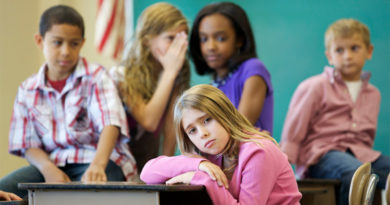
- Children for whom the school environment itself is the obstacle, including those facing bullying, social anxiety, or health conditions that interrupt attendance.
- Students who need a different pace, whether faster or slower, than a class of forty allows.
It suits families least when a child depends heavily on in-person social contact and the family cannot arrange it elsewhere, or when reliable internet and a quiet study space are genuinely unavailable. An honest school will say this too.
Top Online Schools in India and Beyond
A few names come up repeatedly when families in India start researching, and they illustrate the range of the model:
- Sunbeam World School is an accredited online school teaching students from pre-primary to Class 12 with live classes across Indian, British, and American curricula, with certification through recognised boards including NIOS.
- bina is an international live online school for ages 4 to 15, known for very small classes and a curriculum aligned to US and UK standards, with students and teachers joining from around the world.
- Stanford Online High School is a selective, accredited online school for grades 7 to 12 run by Stanford University, teaching through live seminar-style classes and often cited as proof of how far the model can go academically.
The three serve different ages, boards, and budgets, which is the real lesson: “online school” is a category, not a single product, and the checks in the previous section apply to every name on any list.
The Bottom Line
Online school is best understood as a change of venue, not a change of substance. The timetable, the teachers, the curriculum, the exams, and the certificate all remain. What changes is that a child can access all of it from anywhere. For families whose lives do not fit the geography of a campus, that single change is often the difference between education that bends and education that breaks.